Your appointment is long overdue, and yet you still can't bring yourself to pick up the phone. Just thinking about the smell of the waiting room, the sound of the drill or that moment when you're lying in the chair with nothing left in your control is enough to push it back to next week. And then the week after.
If that sounds familiar, you are not alone. Many people feel uneasy at the thought of going to the dentist, some so strongly that they stay away for years. It is not a sign of weakness, and there is nothing to be ashamed of. Often there is a bad experience from the past behind it, sometimes simply not knowing what to expect.
The good news: you can't talk fear away, but you can make it smaller. With the following seven tips you can shape your next appointment so that it feels a lot safer.
Before your appointment: making the first step easier
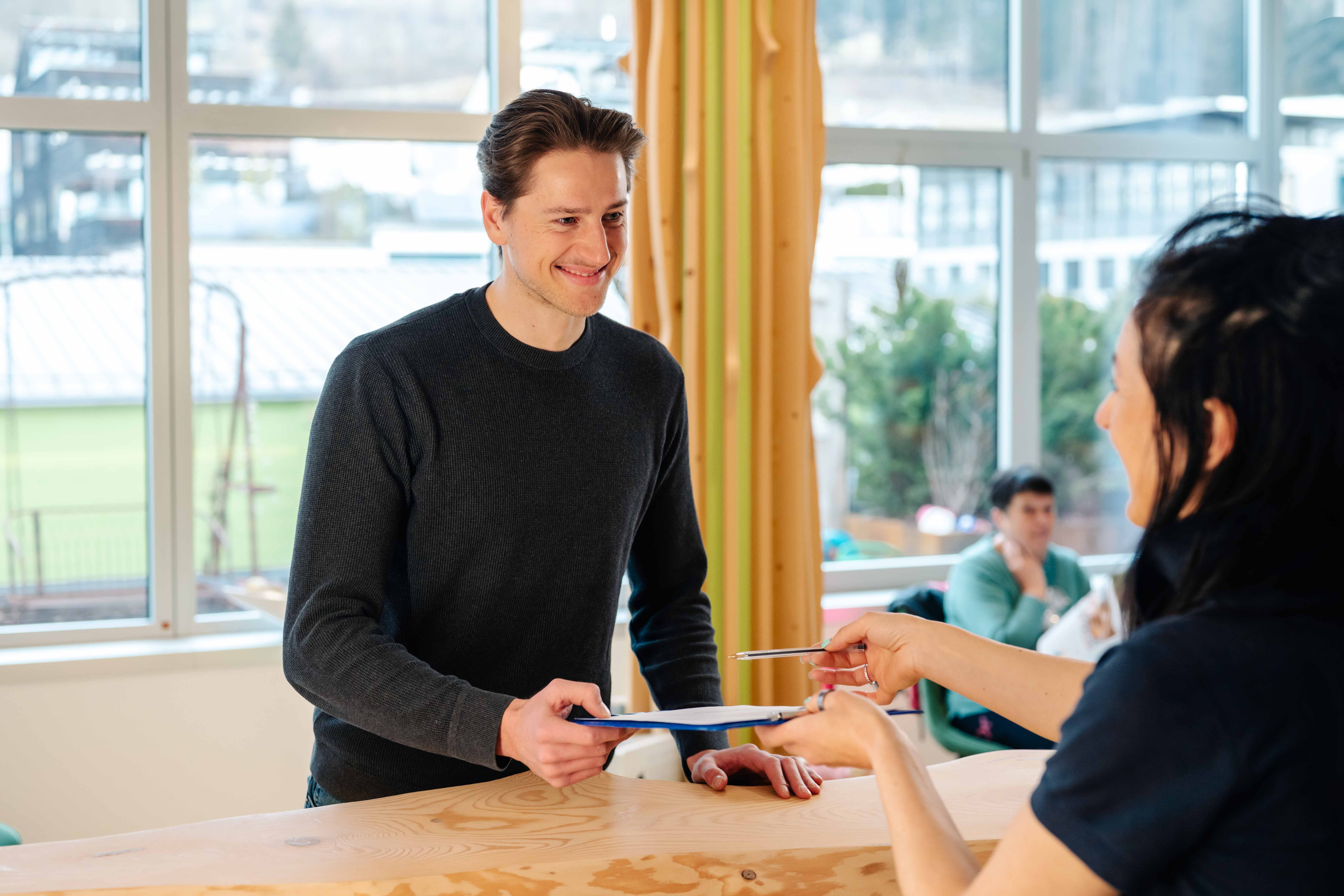
1. Say it openly. Mention your fear as soon as you book. You don't have to explain anything, one sentence is enough: “I'm very anxious about the dentist and need a little more time.” That way the team can prepare, and you don't have to pretend in the treatment room.
2. Choose a practice that specialises in anxious patients. Not every practice works the same way. Check whether dental anxiety is openly addressed on their website, whether they have a dedicated approach and whether options such as nitrous oxide or twilight sedation are available. It shows you that your worries will be taken seriously.
3. Make first contact without a dental chair. For many people the chair itself is the biggest trigger. That's why it helps when the first conversation happens somewhere else: on the phone, by message or in a quiet room where you simply talk. Get to know each other first, then decide.
In the treatment room: staying in control
4. Agree on a stop signal. Much of the fear comes from feeling helpless. Before you start, agree on a clear signal, such as raising your left hand, that means an immediate break. Simply knowing you can stop at any time takes a lot of pressure off for many people.
5. Distract yourself. Your favourite music or an audiobook on headphones can cover up sounds and take your mind elsewhere. Ask beforehand whether that works for your treatment. Some people also find it helps to hold a small object, like a stress ball, to release tension.
6. Breathe on purpose. Fear makes your breathing shallow and fast, which only adds to the restlessness. Breathe in slowly through your nose while counting to four, then breathe out for longer, to about six. Practise this at home for a few days beforehand so it comes more easily in the chair.
Tip 7: reach your goal in small steps
You don't have to do everything at once. A first appointment can simply be a consultation, with no treatment at all. Then perhaps an examination, and later the actual treatment. Every step that goes well gives you confidence for the next one. So don't set yourself a huge goal, just the next small one: make a call or send a message today.
How we work at our practice
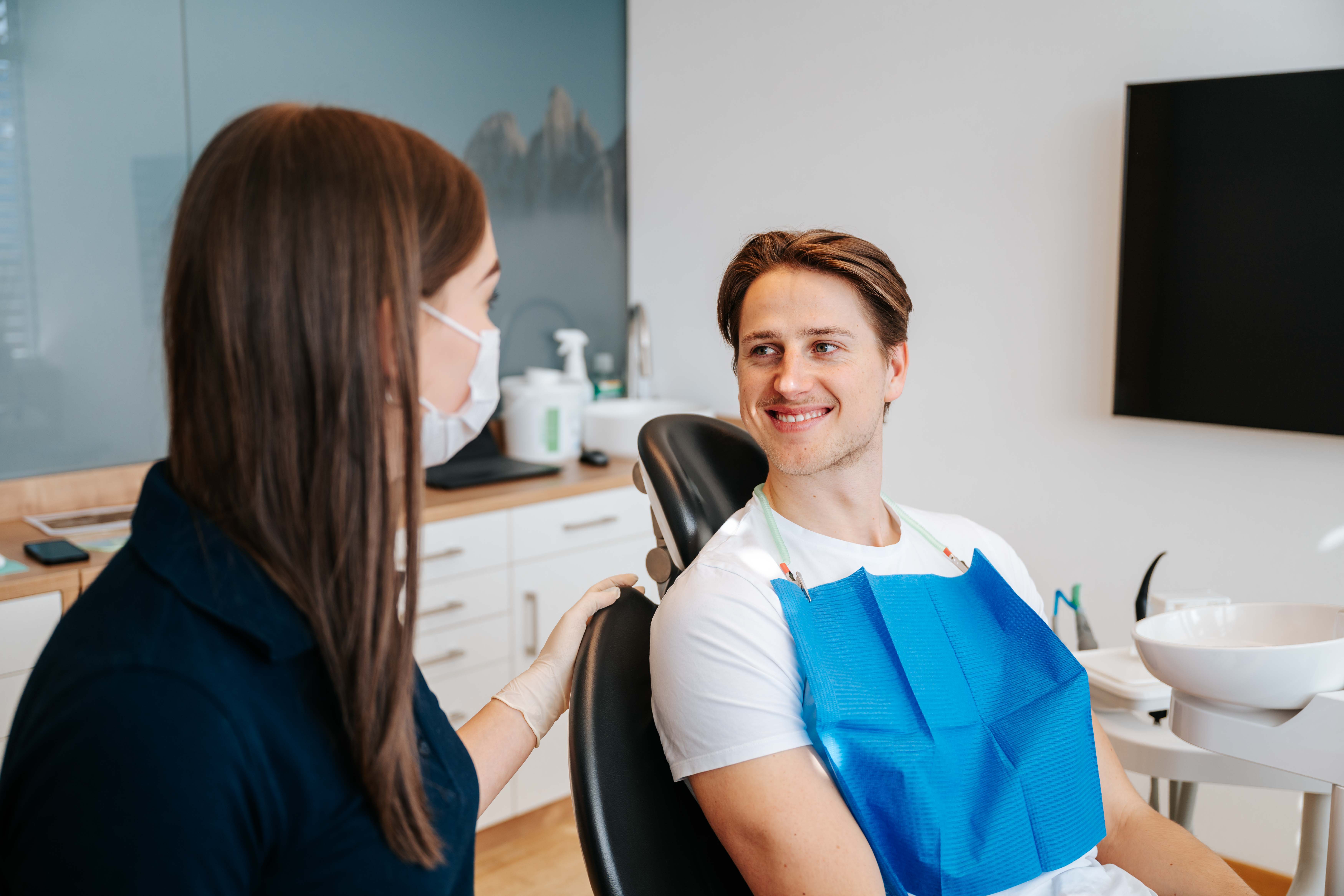
At our practice in Pfalzen near Bruneck, we specialise in anxious patients. We explain every step, listen to you and set the pace together. At your first appointment you don't have to be treated straight away: treatment only takes place when you feel ready. For people with severe anxiety we offer the 3-T method, an approach in three gentle steps:
- T1, arriving and building trust: your first contact can be by phone, email or WhatsApp, and anonymously if you prefer. In a calm setting without a dental chair, you talk through your fears and questions with Dr. Jule Hirte. A 3D X-ray shows us the condition of your teeth, and together we draw up a first plan, without any pressure.
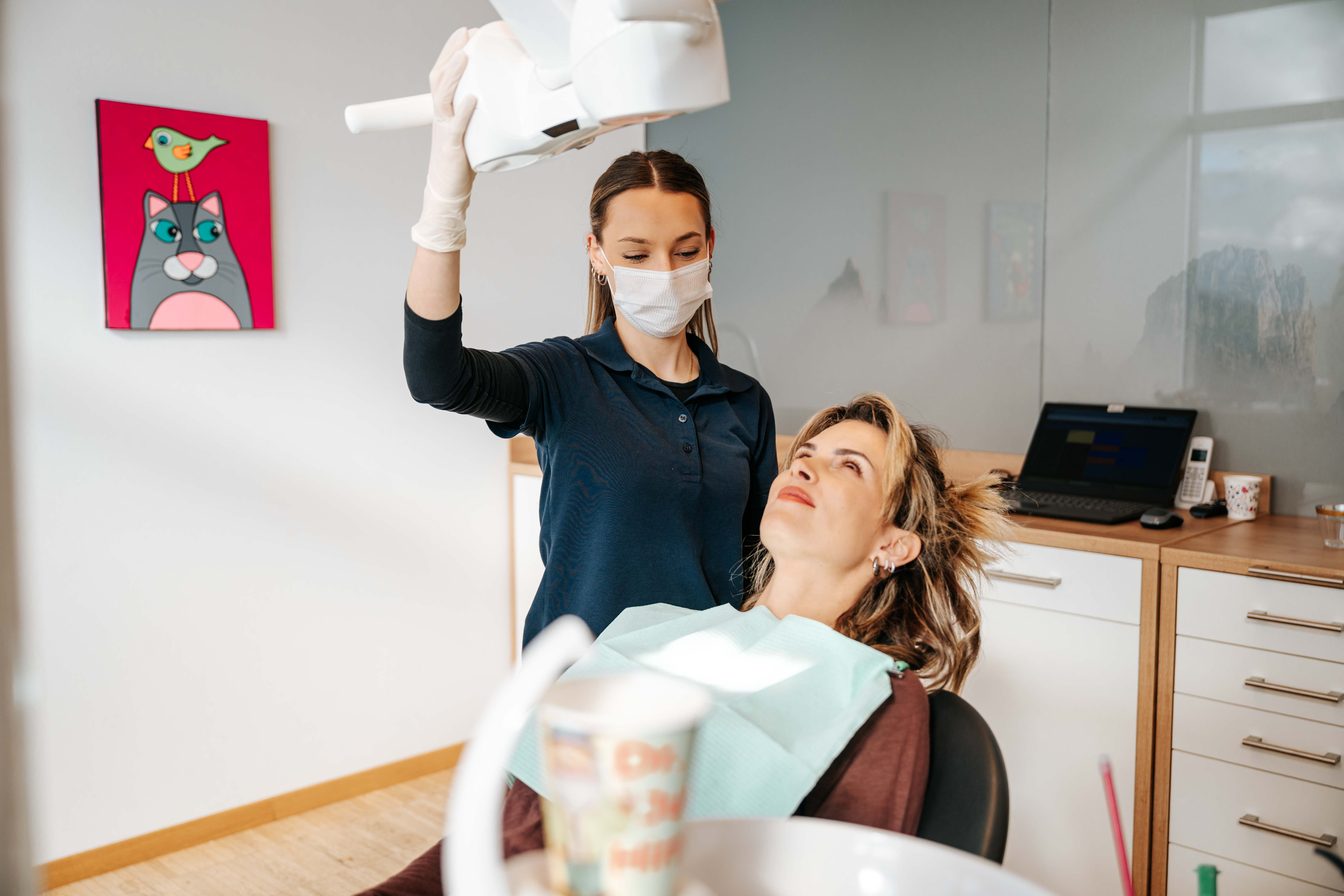
- T2, the treatment: only when you are ready do we plan the procedure, either at our practice or at Brixsana. To help you relax we offer nitrous oxide (laughing gas), twilight sedation (conscious sedation) or general anaesthesia. Together we choose the method that suits you best.
- T3, completion: finally comes the follow-up check or the fitting of your permanent restoration. Sedation is usually no longer needed for this appointment, because by then the fear has often become noticeably smaller.
As a general rule, nitrous oxide works quickly and wears off soon after treatment. With twilight sedation you are deeply relaxed without being under general anaesthesia. Whether any of these options is right for you is something Dr. Jule Hirte will discuss with you personally. And if some anxiety remains afterwards, we will keep supporting you with care.
The first step can be a small one
You don't have to plan any treatment today. It's enough to get in touch. Call us or message us on WhatsApp or by email, anonymously if you prefer. Or book your appointment directly online. We take time for you, whether you come from Bruneck, Pfalzen or anywhere else in the Puster Valley.